







Project Enlightenment · Overview
Project Enlightenment · Appendix · Almanac of the Dynasties
Europe's Noble Houses
Holdings · the crown that elevated them · the why · and the line, traceable into the present (as of June 2026)
Listen (read by Mira)
✦ · Methodology
How to read this register
A complete register is impossible: the Holy Roman Empire alone had thousands of noble families. This almanac therefore covers the reigning and formerly reigning sovereign houses as well as the most famous families of patent nobility, each with core holdings, the decisive elevations of rank (who · when · why) and today's head of house along with the heir.
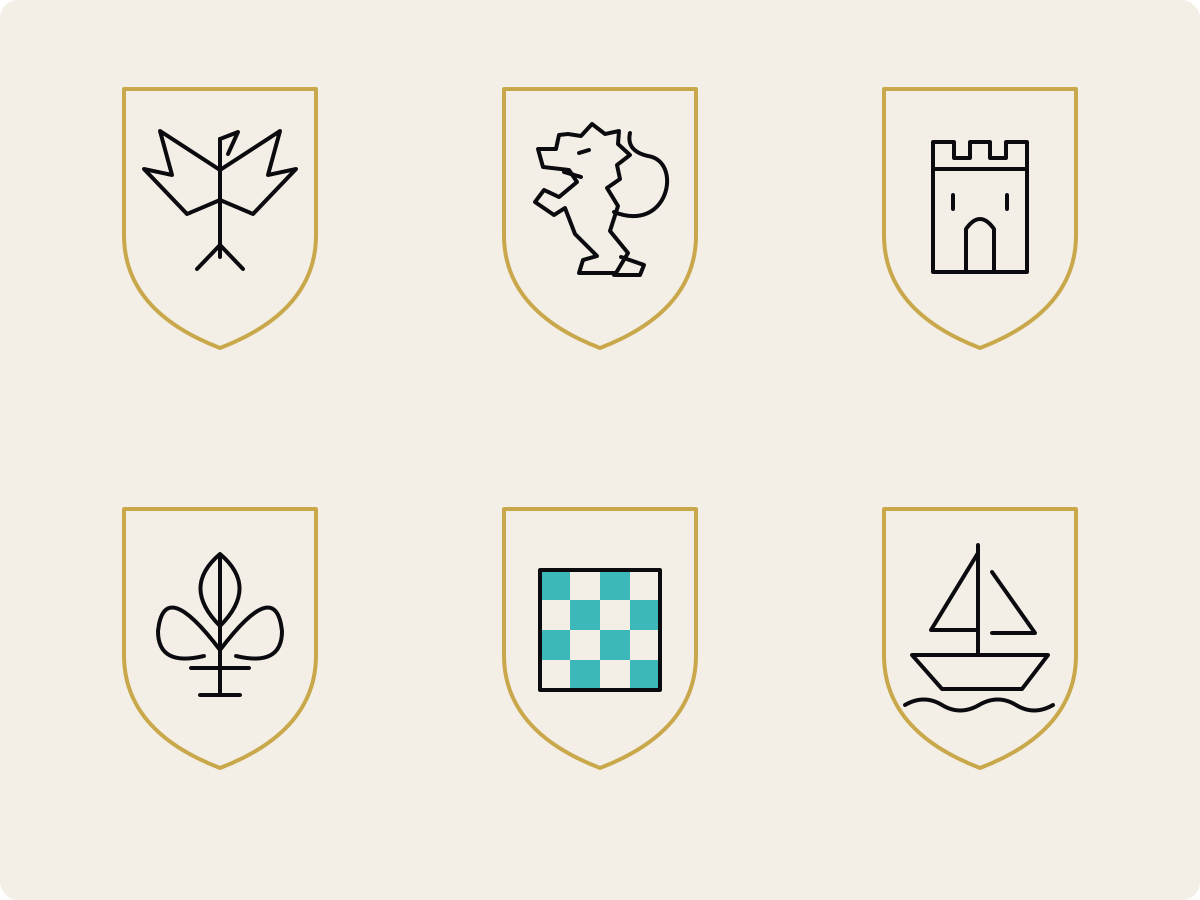
The most common misconception hides in the word “elevated”: the great dynasties were never ennobled. Their nobility was always already there. So the interesting question is not “who made them noble?” but “who raised them to the next rank?” (duke → prince-elector → king).
Uradel
ancient nobility: noble before ~1400, with no act of conferral
Briefadel
patent nobility: a dated patent of nobility from a ruler
Election/Office
sovereign by election or by office
disputed
contested succession today
✦ · The Web of Kinship
Two roots, one continent
Queen Victoria, “the grandmother of Europe”, and Christian IX of Denmark, “the father-in-law of Europe”, married their children into courts across the entire continent.
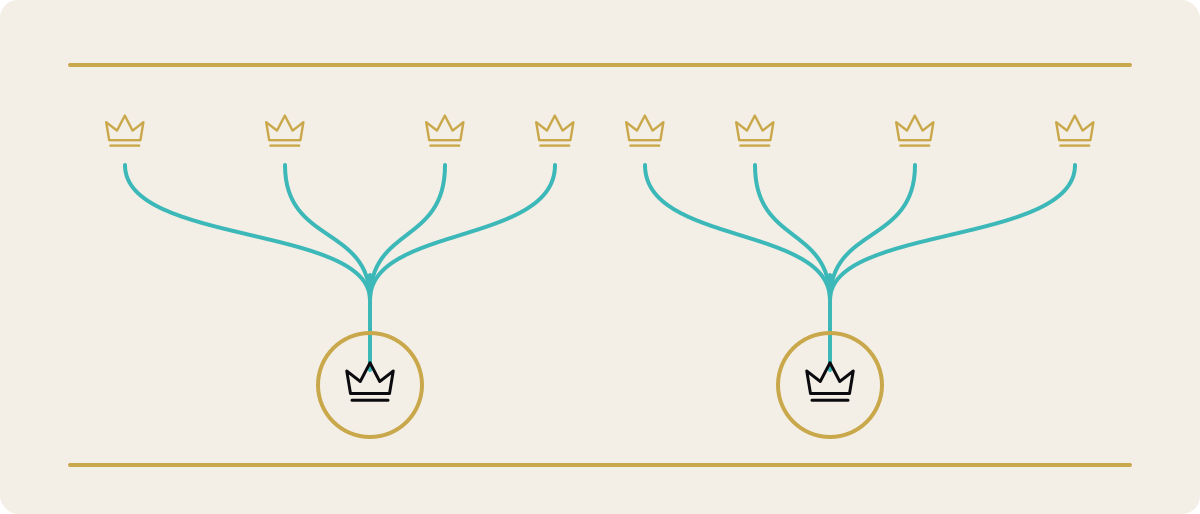
Root I · “Grandmother of Europe”
Victoria
Queen of Great Britain · 1819–1901 · 9 children, 42 grandchildren · married into the courts of Germany, Russia, Spain, Sweden, Greece and others.
Root II · “Father-in-Law of Europe”
Christian IX
King of Denmark · 1818–1906 · children & grandchildren on the thrones of Denmark, Great Britain, Greece, Norway, Russia.
✦ · Money · Land · Art
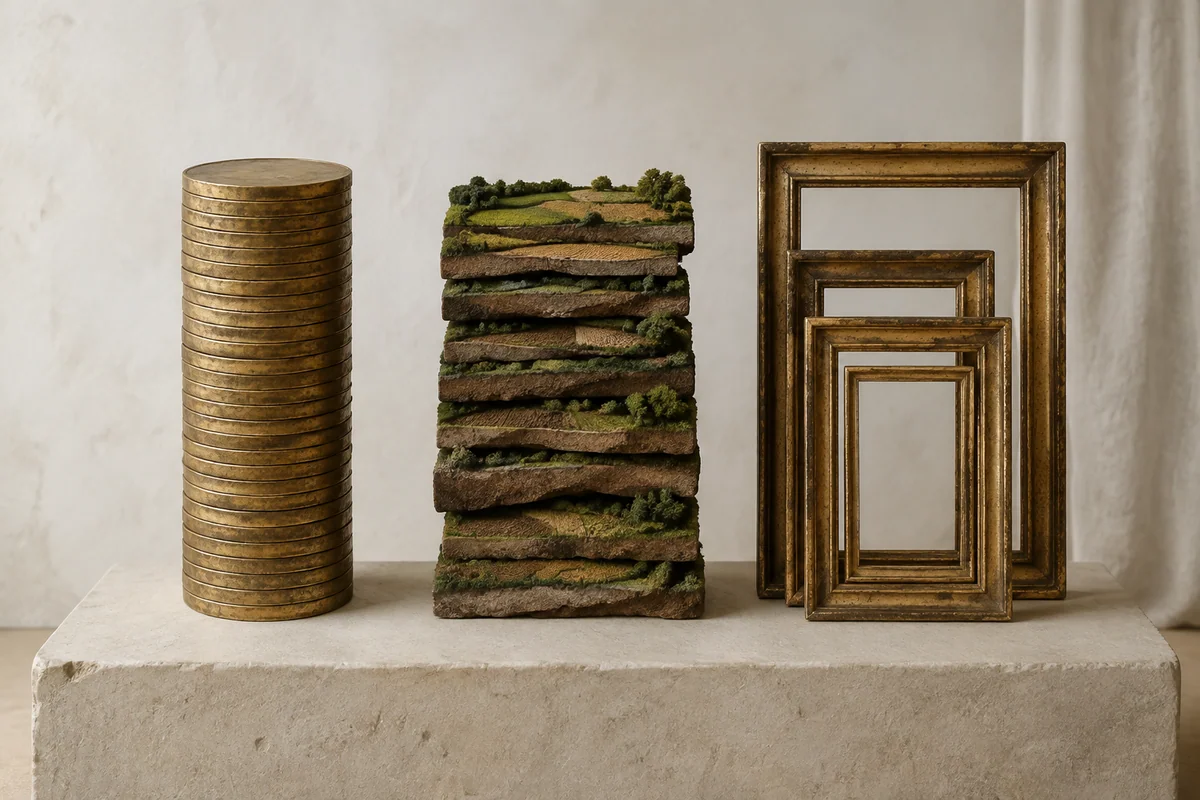
Estimated fortunes
Private fortunes of the heads or houses: not the state or crown property, which is often held in trust for the nation (see the note under Windsor). All figures are published estimates with a wide range.
Windsor
United Kingdom · House of Windsor (origin Saxe-Coburg/Wettin)
Oberhaupt Charles III (seit 8 Sep 2022)
Verwandtschaft Descends from both roots: from Queen Victoria directly, and from Christian IX via Alexandra of Denmark (daughter of Christian IX) and Prince Philip.
Vermögen ≈ $0.77–1.1 billion (estimate) · Sunday Times Rich List 2024 / CEOWORLD 2025
Important: the Crown Estate (~£15.6 billion), the Royal Collection and the Crown Jewels are NOT private property. They are held in trust for the nation. Private: Sandringham and Balmoral, among others; income from the Duchy of Lancaster.
- · Sandringham House & Balmoral Castle (private)
- · Duchy of Lancaster (~£650 million, source of income)
- · Royal stamp & art collection (partly private)
Bourbon · Borbón
Kingdom of Spain · House of Bourbon (Capetians)
Oberhaupt Felipe VI (seit 19 Jun 2014)
Verwandtschaft Via his great-grandmother Victoria Eugenie (a granddaughter of Victoria) and via his mother Sofía of Greece (Glücksburg → Christian IX).
Vermögen Private wealth deliberately opaque. In 2020 Felipe VI publicly renounced the inheritance of his father Juan Carlos I (whose fortune was estimated at $2–2.3 billion, though heavily disputed). No reliable figure of his own. · Reuters/El País 2020
- · Zarzuela Palace (state property, residence)
- · Royal Palace of Madrid (state property, ceremonial)
Orange-Nassau
Kingdom of the Netherlands · House of Orange-Nassau
Oberhaupt Willem-Alexander (seit 30 Apr 2013)
Verwandtschaft Connected to the German and British houses through numerous marriages, but not in the direct line of either root. Has paid taxes on private wealth since the 1970s.
Vermögen Earlier estimates (at times hundreds of millions of euros) are considered inflated and have been disputed. Annual budget of the monarchy ~€50 million. No reliable private figure. · Statista / RTL Nieuws
- · Historic palaces (state property)
- · Private wealth taxed since ~1973
Saxe-Coburg
Kingdom of Belgium · House of Saxe-Coburg and Gotha (Belgian line)
Oberhaupt Philippe (seit 21 Jul 2013)
Verwandtschaft Founded by Leopold I, Queen Victoria's uncle. Related to Victoria through the Coburg line.
Vermögen Civil list ~€12 million/year; private wealth is considered moderate and has not been reliably quantified. · Belgian state budget
- · Castle of Laeken (state property)
- · Royal Trust / Donation Royale
Luxembourg-Nassau
Grand Duchy of Luxembourg · Luxembourg-Nassau (official) · agnatically Bourbon-Parma
Oberhaupt Guillaume V (seit 3 Oct 2025)
Verwandtschaft Connected to the Coburgs via Henri's mother Joséphine-Charlotte of Belgium; agnatically Bourbon-Parma. Henri abdicated in favour of Guillaume on 3 Oct 2025.
Vermögen ≈ $4–4.6 billion (estimate) · CEOWORLD 2025 / Business Insider
The family draws no “salary”; the house's private property belongs exclusively to the bearer of the crown. Estimates vary (~$4–4.6 billion).
- · Extensive real-estate portfolio
- · Land, jewellery & private collections
- · Fischbach Castle, Berg Castle
Liechtenstein
Principality of Liechtenstein · House of Liechtenstein (Austrian high nobility)
Oberhaupt Hans-Adam II (regent: Hereditary Prince Alois) (seit 1989 (Alois regent since 2004))
Verwandtschaft Stands outside the Victoria/Christian IX web: an old house of Austrian high nobility. An example that NOT all houses are related to one another.
Vermögen ≈ $3.5–8.4 billion (estimate) · Wikipedia / Telegraph / CEOWORLD 2025
The richest reigning house in Europe. Source: LGT Bank (one of Europe's largest private banks) + the Princely Foundation. Estimates diverge widely ($3.5 billion to $8.4 billion).
- · LGT Group (private bank)
- · Princely Collections, one of the largest private art collections in the world (Rubens et al.)
- · Forests, wineries, real estate (Princely Foundation)
Grimaldi
Principality of Monaco · House of Grimaldi (from Genoa)
Oberhaupt Albert II (seit 6 Apr 2005)
Verwandtschaft Connected to European nobility through modern marriages; not in the direct line of either root.
Vermögen ≈ $1–1.3 billion (estimate) · Wikipedia / CEOWORLD 2025
Sources of wealth: a stake in the Société des Bains de Mer (casinos, hotels) and real estate, among others. Claims of “$42 billion” (ownership of the entire state) are unsubstantiated/disputed.
- · Société des Bains de Mer (Casino de Monte-Carlo, hotels)
- · Prince's Palace of Monaco
- · Extensive real-estate holdings in the principality
Glücksburg
Kingdom of Denmark · House of Schleswig-Holstein-Sonderburg-Glücksburg (Oldenburg)
Oberhaupt Frederik X (seit 14 Jan 2024)
Verwandtschaft Direct male line from Christian IX. Margrethe II abdicated on 14 Jan 2024.
Vermögen Civil list ~DKK 90 million/year; private estates exist but have not been reliably quantified. · Danish court figures
- · Amalienborg Palace (state property)
- · Fredensborg Palace
- · Private estates (incl. Château de Cayx, France)
Glücksburg
Kingdom of Norway · House of Glücksburg (Oldenburg)
Oberhaupt Harald V (often regent: Crown Prince Haakon) (seit 17 Jan 1991)
Verwandtschaft Europe's oldest reigning monarch (b. 1937). Descends from Christian IX via Haakon VII (born Prince Carl of Denmark), and from Victoria via his grandmother Maud of Wales.
Vermögen Civil list; private wealth moderate and not reliably quantified. · Norwegian court figures
- · Royal Palace, Oslo (state property)
- · Private estate Mågerø (sold 2021)
Bernadotte
Kingdom of Sweden · House of Bernadotte (NOT Uradel, founded 1818)
Oberhaupt Carl XVI Gustaf (seit 15 Sep 1973)
Verwandtschaft Europe's longest-reigning monarch. Descends from Victoria via his grandmother Margaret of Connaught (a granddaughter of Victoria). The house itself goes back to Napoleon's marshal Jean-Baptiste Bernadotte.
Vermögen Court budget from the state; private wealth moderate, not reliably quantified. · Swedish court figures
- · Stockholm Palace (state property)
- · Drottningholm Palace (residence, state property)
Co-Principality
Principality of Andorra · Two co-princes (no hereditary house)
Oberhaupt Emmanuel Macron & Bishop Serrano (seit Monarchy by office)
Verwandtschaft Not a dynastic house: the French president and the Bishop of Urgell serve jointly as head of state. A deliberately non-hereditary model.
Vermögen No dynastic wealth: an office, not a family. · —
- · —
Holy See
Vatican City State · Elective monarchy (no hereditary house)
Oberhaupt Pope Leo XIV (seit 8 May 2025)
Verwandtschaft Not a dynastic house: elected by the conclave. On 8 May 2025 Robert Prevost became the first pope from the United States.
Vermögen No private family wealth. The Holy See administers enormous assets (art, real estate): institutionally, not personally. · —
- · Vatican Museums & collections (institutional)
- · Real estate of the Holy See (institutional)
Hohenzollern
Prussia · German Empire · House of Hohenzollern (Swabian)
Oberhaupt Georg Friedrich, Prince of Prussia (seit Head of the house since 1994)
Verwandtschaft Wilhelm II was a grandson of Victoria, hence descent from Root I. Not reigning today.
Vermögen Heavily disputed (a years-long battle over compensation/restitution, largely settled in 2023). No reliable public total. · German press 2019–2023
- · Hohenzollern Castle (ancestral seat)
- · Disputed claims to art & furnishings
Wittelsbach
Bavaria · Palatinate · House of Wittelsbach
Oberhaupt Franz, Duke of Bavaria (seit Head of the house since 1996)
Verwandtschaft One of the oldest German houses. Not in the line of either root.
Vermögen Most of the historic wealth sits in the “Wittelsbacher Ausgleichsfonds” (a foundation holding, among other things, art in the Alte Pinakothek), not personal private wealth. · Wittelsbacher Ausgleichsfonds
- · Wittelsbacher Ausgleichsfonds (art, incl. loans to the Alte Pinakothek)
- · Nymphenburg Palace (managed by the Bavarian Palace Administration)
Welf · Hanover
Brunswick-Lüneburg · Hanover · House of Welf (Europe's oldest princely house)
Oberhaupt Ernst August (hereditary prince: Ernst August Jr) (seit Head of the house)
Verwandtschaft Closely interwoven with the British via the personal union of Hanover and Great Britain (until 1837); descent from Victoria, among others.
Vermögen Parts auctioned in 2005 (Sotheby’s, ~€44 million). No reliable current total. · Sotheby’s 2005 / press
- · Marienburg Castle (transferred to a foundation in 2018)
- · Historic collections (partly auctioned)
Habsburg-Lorraine
Austria-Hungary · Holy Roman Empire · House of Habsburg-Lorraine
Oberhaupt Karl von Habsburg (seit Head of the house since 2007)
Verwandtschaft Once the most powerful house in Europe. Not reigning today; intermarried many times with European nobility.
Vermögen Expropriated in Austria after 1919 (Habsburg Law). No reliable public total. · Habsburg Law of 1919
- · Private collections
- · Involvement in foundations (Paneuropa et al.)
Thurn und Taxis
Regensburg · Imperial Princes · Briefadel → Imperial Princes
Oberhaupt Albert II of Thurn und Taxis (seit Head of the house since 1990)
Verwandtschaft Rose through the imperial postal monopoly (16th–19th century). Not in the line of either root.
Vermögen ≈ €0.6–3 billion (estimate) · manager magazin / Forbes (varies widely)
The range is huge ($0.6–3 billion) because forest, land and palace are illiquid and are valued differently depending on the method. Germany's largest private forest holding (~20,000 ha).
- · St. Emmeram Palace (the largest privately inhabited palace in Germany)
- · ~20,000 ha of forest (largest private forest in Germany)
- · Breweries, holdings, investments
I.
Europe's reigning houses today
Twelve monarchies persist in 2026. Andorra and the Vatican are monarchies by office and by election, respectively, with no continuous dynasty.
Windsor
United Kingdom (+ 14 Commonwealth realms)
Uradel · Wettin
Core holdingsGreat Britain & Northern Ireland, Canada, Australia, New Zealand and others
Rangerhöhungen
- 1714 – British crown to the House of Hanover (Act of Settlement 1701): Protestant succession secured
- 1917 – renamed “Windsor” by George V: distance from the German name during the World War
Bis heute Charles III (since 8 Sep 2022) → William, Prince of Wales → Prince George
Bourbon · Borbón
Kingdom of Spain
Uradel · Capetians
Core holdingsSpain
Rangerhöhungen
- 1700 – Spanish throne to Philip V (testament of Charles II): confirmed in 1713 in the Peace of Utrecht
Bis heute Felipe VI (since 19 Jun 2014) → Leonor, Princess of Asturias
Orange-Nassau
Kingdom of the Netherlands
Uradel · Nassau
Core holdingsNetherlands (previously stadtholders of the Republic)
Rangerhöhungen
- 1815 – kingdom by the Congress of Vienna (William I): buffer state against France
Bis heute Willem-Alexander (since 30 Apr 2013) → Catharina-Amalia, Princess of Orange
Saxe-Coburg (Belgian line)
Kingdom of Belgium
Uradel · WettinElected 1831
Core holdingsBelgium
Rangerhöhungen
- 1831 – Leopold I elected King of the Belgians by the National Congress: a neutral sovereign for the young state
Bis heute Philippe (since 21 Jul 2013) → Elisabeth, Duchess of Brabant
Luxembourg-Nassau
Grand Duchy of Luxembourg
Uradel · agnatically Bourbon-Parma
Core holdingsLuxembourg
Rangerhöhungen
- 1815 – grand duchy (Congress of Vienna), union with the Netherlands
- 1890 – own line Nassau-Weilburg (Adolphe): female succession in NL, not in LU
Bis heute Guillaume V (since 3 Oct 2025, Henri's abdication) → Prince Charles (b. 2020)
Liechtenstein
Principality of Liechtenstein
Uradel · Lower Austria
Core holdingsVaduz, Schellenberg → principality; vast private estates, LGT Bank
Rangerhöhungen
- 1719 – imperial principality by Emperor Charles VI: purchase of seat & vote in the Council of Imperial Princes
Bis heute Hans-Adam II (since 1989); reigning: Hereditary Prince Alois (since 2004) → Joseph Wenzel
Grimaldi
Principality of Monaco
Uradel · Genoa
Core holdingsMonaco
Rangerhöhungen
- 1297 – seizure of Monaco (François “Malizia” Grimaldi): the famous ruse in a monk's habit
- 1612 – princely title in use; sovereignty recognised later
Bis heute Albert II (since 6 Apr 2005) → Jacques, Hereditary Prince
Glücksburg (Denmark)
Kingdom of Denmark
Uradel · Oldenburg
Core holdingsDenmark (Greenland, Faroe Islands)
Rangerhöhungen
- 1863 – Christian IX inherits the throne (London Protocol of 1852): “father-in-law of Europe”
Bis heute Frederik X (since 14 Jan 2024, Margrethe II's abdication) → Crown Prince Christian
Glücksburg (Norway)
Kingdom of Norway
Uradel · OldenburgElected 1905
Core holdingsNorway
Rangerhöhungen
- 1905 – Danish Prince Carl elected as Haakon VII: exit from the union with Sweden, by referendum
Bis heute Harald V (since 17 Jan 1991) → Crown Prince Haakon → Ingrid Alexandra
Bernadotte
Kingdom of Sweden
not UradelElected 1810
Core holdingsSweden
Rangerhöhungen
- 1810 – French marshal J.-B. Bernadotte elected crown prince by the Riksdag: the search for an experienced soldier; Europe's youngest dynasty
- 1818 – king as Charles XIV John
Bis heute Carl XVI Gustaf (since 15 Sep 1973) → Crown Princess Victoria
Andorra (Co-Principality)
Principality of Andorra
Monarchy by office
Special featureTwo co-princes by virtue of office, no dynasty
Rangerhöhungen
- 1278 – Paréage agreements: sovereignty divided between Urgell & Foix/France
Bis heute The President of France (E. Macron) & the Bishop of Urgell
Vatican City State
Holy See
Elective monarchy
Special featureEurope's only absolute elective monarchy; the sovereign is the pope
Rangerhöhungen
- 1929 – Lateran Treaties: restoration of temporal sovereignty
Bis heute Pope Leo XIV (elected 2025), not dynastic
II.
Formerly reigning houses: Germany
The monarchy ended in 1918; the houses live on under private law, managing palaces, forests and foundations. Striking: in 1806 the royal crowns of Bavaria, Württemberg and Saxony came not from an emperor but from Napoleon.
Hohenzollern
Prussia · German Empire
Uradel · Swabian
Core holdingsBrandenburg, Prussia, imperial territory; Hohenzollern Castle
Rangerhöhungen
- 1415 – Margraviate of Brandenburg from Emperor Sigismund: loyalty + financial aid
- 1701 – “King in Prussia” (self-coronation, with Leopold I's consent): troops for the War of the Spanish Succession
- 1871 – German Emperor (Wilhelm I): unification of the Reich
Bis heute Georg Friedrich, Prince of Prussia (since 1994) → Carl Friedrich (b. 2013)
Wittelsbach
Bavaria · Palatinate
Uradel
Core holdingsBavaria, Electoral Palatinate, Cologne (archbishopric)
Rangerhöhungen
- 1180 – Duchy of Bavaria from Frederick I Barbarossa: after the fall of Henry the Lion
- 1623 – electoral dignity from Emperor Ferdinand II: Catholic League in the Thirty Years' War
- 1806 – Kingdom of Bavaria (Napoleon/Confederation of the Rhine)
Bis heute Franz, Duke of Bavaria (since 1996) → his brother Max, Duke in Bavaria
Welf · Hanover
Brunswick-Lüneburg · Hanover
Uradel · oldest princely house
Core holdingsBrunswick, Lüneburg, Hanover
Rangerhöhungen
- 1235 – duchy from Emperor Frederick II: reconciliation after the fall of the Welfs
- 1692 – electoral dignity from Emperor Leopold I: aid against the Turks & France
- 1714 / 1814 – British crown / Kingdom of Hanover
Bis heute Ernst August, Prince of Hanover (b. 1954) → Ernst August Jr (b. 1983)
Wettin (Albertine line)
Kingdom of Saxony
UradelSuccession disputed
Core holdingsSaxony, Meissen, Thuringia
Rangerhöhungen
- 1423 – electoral dignity from Emperor Sigismund: aid in the Hussite Wars
- 1547 – electorate transferred by Charles V: switching sides in the Schmalkaldic War
- 1806 – Kingdom of Saxony (Napoleon)
Bis heute disputed: Alexander, Margrave of Meissen (Sachsen-Gessaphe; family pact of 2012) ↔ the Rüdiger/Daniel line
Wettin (Ernestine line)
Saxe-Coburg and Gotha, among others
Uradel
Core holdingsCoburg, Gotha, Weimar, Meiningen, Altenburg
Significance“the stud farm of Europe”: supplied kings for Belgium, Portugal, Bulgaria & Britain
Bis heute Hubertus, Prince of Saxe-Coburg and Gotha (since 2025, after Andreas †)
Baden (Zähringen)
Grand Duchy of Baden
Uradel
Core holdingsBaden; Salem Castle
Rangerhöhungen
- 1803 – electoral dignity (Final Recess of the Imperial Deputation)
- 1806 – grand duchy (Napoleon/Confederation of the Rhine)
Bis heute Bernhard, Margrave of Baden (since 2022) → Leopold (b. 2002)
Württemberg
Kingdom of Württemberg
Uradel
Core holdingsWürttemberg; Altshausen Castle
Rangerhöhungen
- 1495 – duchy from Emperor Maximilian I (Diet of Worms): consolidation, money
- 1806 – kingdom (Napoleon)
Bis heute Wilhelm, Duke of Württemberg (b. 1994, since 2022 as Carl's grandson) → his uncle Eberhard
Hesse (Brabant / Reginars)
Electoral Hesse · Hesse-Darmstadt
Uradel
Core holdingsHesse; Fasanerie Palace, Kronberg
Rangerhöhungen
- 1292 – imperial prince by King Adolf of Nassau: imperial immediacy
- 1803 / 1806 – prince-elector (Electoral Hesse) / grand duke (Darmstadt)
Bis heute Donatus, Landgrave of Hesse (since 2013)
Mecklenburg (House of Niklot)
Grand Duchies of Schwerin & Strelitz
Uradel · Obotrite
Core holdingsMecklenburg
Rangerhöhungen
- 1348 – duchy from Emperor Charles IV: the only reigning house of Slavic origin
- 1815 – grand duchies (Congress of Vienna)
Bis heute Borwin, Duke of Mecklenburg (Schwerin line)
Oldenburg
Grand Duchy of Oldenburg
Uradel
Core holdingsOldenburg; ancestral house of the Danish, Greek & Norwegian kings
Rangerhöhungen
- 1815 – grand duchy (Congress of Vienna)
Bis heute Christian, Duke of Oldenburg
Anhalt (Ascanians)
Duchy of Anhalt
Uradel
Core holdingsAnhalt; related to the Brandenburg Ascanians
Rangerhöhungen
- 1806/1807 – duchies in the Confederation of the Rhine
Bis heute Eduard, Prince of Anhalt
III.
Formerly reigning houses: the rest of Europe
A representative selection of the great European dynasties. Several claims to thrones are disputed between lines today, marked accordingly.
Habsburg-Lorraine
Austria-Hungary · Holy Roman Empire
Uradel
Core holdingsAustria, Bohemia, Hungary, once half of Europe
Rangerhöhungen
- from 1273 – royal election; archduchy (Privilegium maius)
- 1438–1806 – Holy Roman Emperors almost without interruption
- 1804 – Empire of Austria
Bis heute Karl von Habsburg (head since 2007/11) → Ferdinand
Bourbon & Orléans
Kingdom of France
Uradel · CapetiansClaim disputed
Core holdingsFrance (monarchy ended 1848/1870)
Bis heute disputed: Louis Alphonse de Bourbon (Legitimists) ↔ Jean d’Orléans (Orléanists); Bonapartist: Jean-Christophe Napoléon
Savoy
Kingdom of Italy
UradelClaim disputed
Core holdingsSavoy, Sardinia → Italy (1861–1946)
Bis heute disputed: Emanuele Filiberto of Savoy (after Vittorio Emanuele †2024) ↔ the Aosta line
Romanov
Russian Empire
UradelClaim disputed
Core holdingsRussia (1613–1917)
Bis heute disputed: Maria Vladimirovna & her son Georgi ↔ the Romanov Family Association
Glücksburg (Greece)
Kingdom of Greece
Uradel · Oldenburg
Core holdingsGreece (1863–1973)
Bis heute Pavlos, Crown Prince (after Constantine II †2023)
Saxe-Coburg-Koháry
Tsardom of Bulgaria
Uradel · Wettin
Core holdingsBulgaria (1887–1946)
Bis heute Simeon II (living; served as Bulgaria's prime minister 2001–05)
Hohenzollern-Sigmaringen
Kingdom of Romania
Uradel
Core holdingsRomania (1881–1947); Sigmaringen Castle
Bis heute Margareta, “Custodian of the Romanian Crown” · German line: Karl Friedrich (since 2010)
Karađorđević
Kingdom of Yugoslavia / Serbia
Serbian dynasty
Core holdingsSerbia, Yugoslavia
Bis heute Crown Prince Alexander → Peter
Bragança
Kingdom of Portugal
Uradel
Core holdingsPortugal, Brazil (empire)
Bis heute Duarte Pio, Duke of Bragança → Afonso
Petrović-Njegoš
Kingdom of Montenegro
Montenegrin dynasty
Core holdingsMontenegro (until 1918)
Bis heute Nikola, Crown Prince (a role recognised by the state)
Poland (elective kingship)
Kingdom of Poland-Lithuania
Elective monarchy
Special featureno continuous dynasty: the Piasts & Jagiellonians died out; kings were elected
Bis heute no present-day pretender of constitutional standing
IV.
High nobility & Briefadel with a clear “why”
Here the “who · when · why” has a clear date: elevations of rank for money, service or merit.
Fugger
Augsburg · Imperial Princes & Counts
Briefadel
Core holdingsAugsburg, Babenhausen, Kirchberg-Weißenhorn
Rangerhöhungen
- 1511/14 – ennobled by Maximilian I
- 1530 – counts by Charles V: Fugger money financed the imperial election of 1519
Bis heute the princely & comital Fugger families (Babenhausen, among others)
Thurn und Taxis
Regensburg · Imperial Princes
Briefadel → Imperial Prince
Core holdingsSt. Emmeram Palace (Regensburg); vast forest & real-estate holdings
Rangerhöhungen
- 1695 – Imperial Princes by Emperor Leopold I: reward for the imperial postal regale/monopoly
Bis heute Albert II, Prince of Thurn und Taxis
Bismarck
Pomerania/Saxony · princely house
Uradel + elevation of rank
Core holdingsFriedrichsruh, Schönhausen, Varzin
Rangerhöhungen
- 1865 – count, 1871 – prince by Wilhelm I: unification of the Reich
- 1890 – Duke of Lauenburg
Bis heute princely line continuing (Friedrichsruh)
von Goethe
Weimar · personal nobility
Briefadel
Rangerhöhungen
- 1782 – ennobled by Emperor Joseph II (at Duke Karl August's request): eligibility at court as a Weimar minister
Bis heute male line extinct in 1885
Metternich
Rhineland/Bohemia · princes
Uradel + elevation of rank
Rangerhöhungen
- 1803/1813 – Imperial Prince: diplomacy; architect of the Congress of Vienna
Bis heute princely line (Königswart Castle / Kynžvart)
Esterházy
Hungary · Imperial Princes
magnate nobility → prince
Core holdingsEisenstadt, Forchtenstein; once Hungary's largest landholding
Rangerhöhungen
- 1712 – Imperial Princes by Emperor Charles VI: Habsburg loyalty against the Ottomans & the uprisings
Bis heute Esterházy foundations (Burgenland)
Schwarzenberg
Franconia/Bohemia · Imperial Princes
Uradel → prince
Core holdingsČeský Krumlov (Krumau), Hluboká; extensive Bohemian holdings
Rangerhöhungen
- 1670 – Imperial Princes by Emperor Leopold I
Bis heute princely family (Karel † 2023 → heirs)
Mediatised princely houses
Collective entry · high nobility
Uradel · mediatised lords
ExamplesHohenlohe, Fürstenberg, Sayn-Wittgenstein, Leiningen, Waldburg, Castell, Solms, Stolberg
Fate“mediatised” in 1806: sovereignty lost, rank & equality of birth retained
Bis heute mostly continuing as princely/comital families with castles & forests
V.
The structures behind it
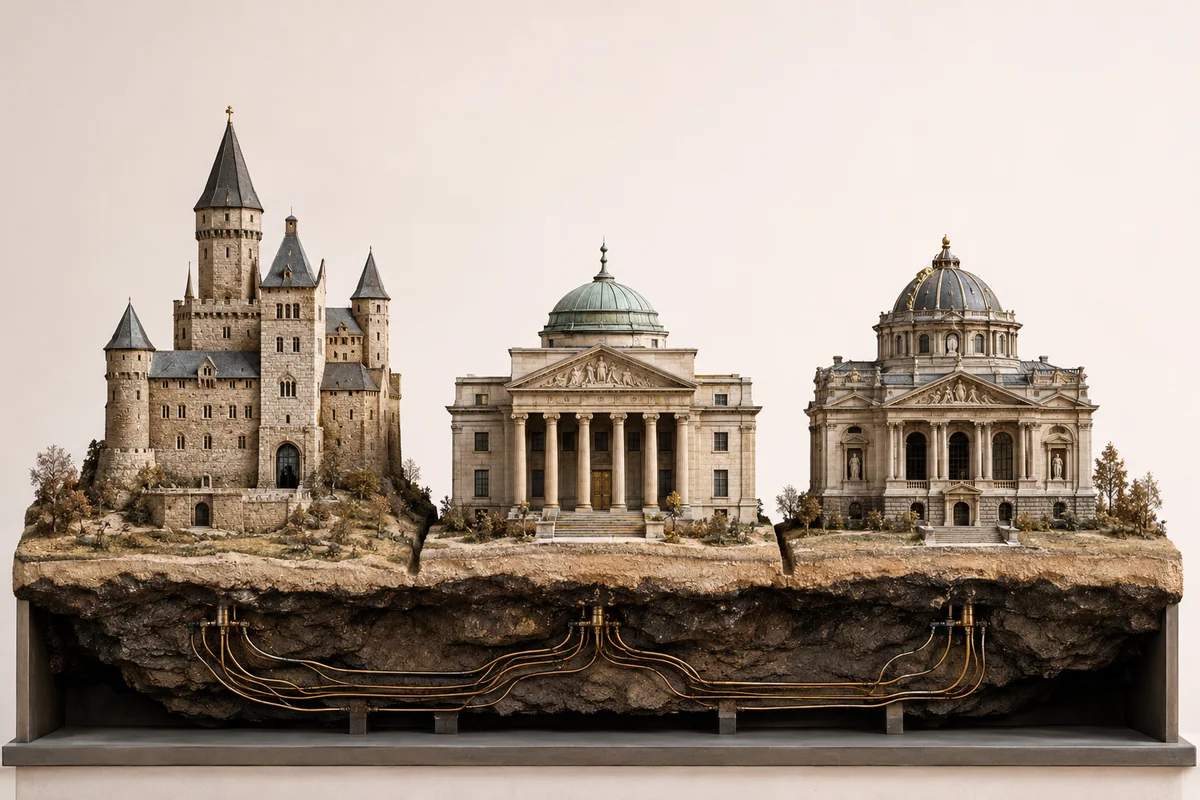
How aristocratic power survived the fall of the monarchies, and the mechanisms through which it still operates today.
The rulebook
The Golden Bull · 1356
FoundationCharles IV fixed the seven prince-electors, the procedure for electing the king, the indivisibility of the electoral lands and succession by primogeniture, in effect the constitution of the Empire.
Continuing effectFor 450 years it defined who even belonged to the innermost circle of power. The electoral houses are exactly the ones that later gained royal crowns: Brandenburg → Prussia, Saxony, Palatinate/Bavaria, Hanover.
The ancient treaties
Mutual succession pacts & house treaties
FoundationTreaties between houses: if one line dies out, the allied one inherits. Plus house treaties such as the Treaty of Pavia (1329, Wittelsbach) or the Wettin agreements from 1485 onwards.
Continuing effectThese treaties bundle inheritance claims across centuries and borders: they are the true “foundation of the Uradel claim”.
Concretely today: the Saxon succession dispute explicitly invokes the mutual succession pact of 1485 to determine the head of the “whole House of Wettin”. And the inheritance treaties of the Princes of Hohenzollern-Hechingen/-Sigmaringen with Prussia (1695/1707) meant that their lands passed to Prussia in 1850.
The accumulation engine
Primogeniture · Dispositio Achillea 1473
FoundationAlbrecht Achilles laid down indivisibility + primogeniture for the Hohenzollerns: one heir gets (almost) everything; the property is never divided.
Continuing effectPrecisely this principle keeps wealth from fragmenting across generations. It is the quiet reason family property stays together for 500 years instead of evaporating.
House law in court
Equality of birth & inheritance contract
FoundationHouse laws demanded marriage “befitting one's rank”; whoever marries beneath their rank loses the inheritance via the equal-birth clause in the inheritance contract.
Continuing effect & limitThe Federal Constitutional Court (22 Mar 2004, “Hohenzollern”, 1 BvR 2248/01) ruled: such clauses may not exert “unreasonable pressure” on the freedom to marry (Art. 6 of the Basic Law). So the old house norms live on in private law. The constitutional state limits them.
In sovereign Liechtenstein, by contrast, the house law of 1993 is valid constitutional law: there, house law still determines the head of state today.
The wealth vehicles
Fideicommissum → court chamber & foundation
FoundationThe fideicommissum bound family property to the line, indivisible and unsellable, abolished in 1919, wound up by ~1938.
Continuing effectIn its place came the court chamber, the corporate group and the family foundation: for instance the Hofkammer of the House of Württemberg, the Unternehmensgruppe Fürst von Hohenzollern, the Esterházy private foundations. Forests, palaces, wineries and real estate are bundled to last for generations.
This is the actual power base today: not thrones, but land + capital in durable legal entities.
Power as litigation
Restitution & property
FoundationAfter 1918 / 1945 / 1990 came endless proceedings over palaces, art and compensation.
Continuing effectSettlements with Saxony/Wettin (2014), Saxe-Coburg-Gotha, Mecklenburg. The Hohenzollerns negotiated from 2014 onwards and in 2023 withdrew two multi-million lawsuits (the Potsdam administrative court closed the proceedings); in 2025 the disputed art objects were transferred into a charitable foundation.
The lesson: “power in the background” appears concretely as disputes over land registers and files, justiciable and open to inspection, not hidden.
The invisible web
Marriage · orders · patronage
FoundationEndogamous marriage policy links the houses across Europe into a “cousinhood”: kinship as infrastructure, not as coincidence.
Continuing effectOrders of knighthood with real standing: the Order of Malta is a subject of international law in its own right (diplomatic relations with around 110 states, UN observer); alongside it the Order of St John and the Order of the Golden Fleece (grand masters: Habsburg and the Spanish Bourbons, respectively).
Privately, the nobility associations also maintain their own “law of nobility” (the Adelsrechtsausschuss; the Genealogisches Handbuch / “Gotha”), with no state validity at all, purely as a self-administered order.
The state's framework
Art. 109 WRV / Art. 123 GG
FoundationWeimar 1919 abolished the nobility as an estate: titles became mere parts of the name, with no privileges. Carried over into the Basic Law.
Continuing effect & limitReintroducing the monarchy is ruled out by Art. 20 & 28 of the Basic Law. What remains is private law: the houses organise themselves as associations, foundations or limited companies.
The framework is openly visible; nothing about it is secret. That is the central point of this entire section.