
energies · IV / XX · Sphere A · Values & Stages · All 20
Your brain builds the world. Not the other way around.
Your sensory system takes in roughly 11 million bits per second. Arriving consciously: about 50. What happens to the rest is decided by three devices inside you. And none of them asks you first.
Do you know the moment when someone tells you something, and you do not hear it, because your head is on something else? You received the sound. You did not receive the world. Between sound and world sit devices.
I · Structure · Measurable
Predictive-coding models are now standard in computational neuroscience. EEG studies show Mismatch Negativity (MMN) as a neural signal for prediction errors. Replicable in infants from 4 months.
II · Flow · Tradition
Buddhism: "The world is mind-made" (Dhammapada Verse 1). Kant: forms of intuition, categories. We do not see the world but our filters. Indian Māyā doctrine: veil before the direct.
III · Breadth · Synthesis
What tradition described as "veil" can today be modelled as filter architecture. Meditation = filter-awareness. Psychedelics = temporary filter loosening. The devices become object instead of apparatus.
„Most perception is prediction, not reception.“
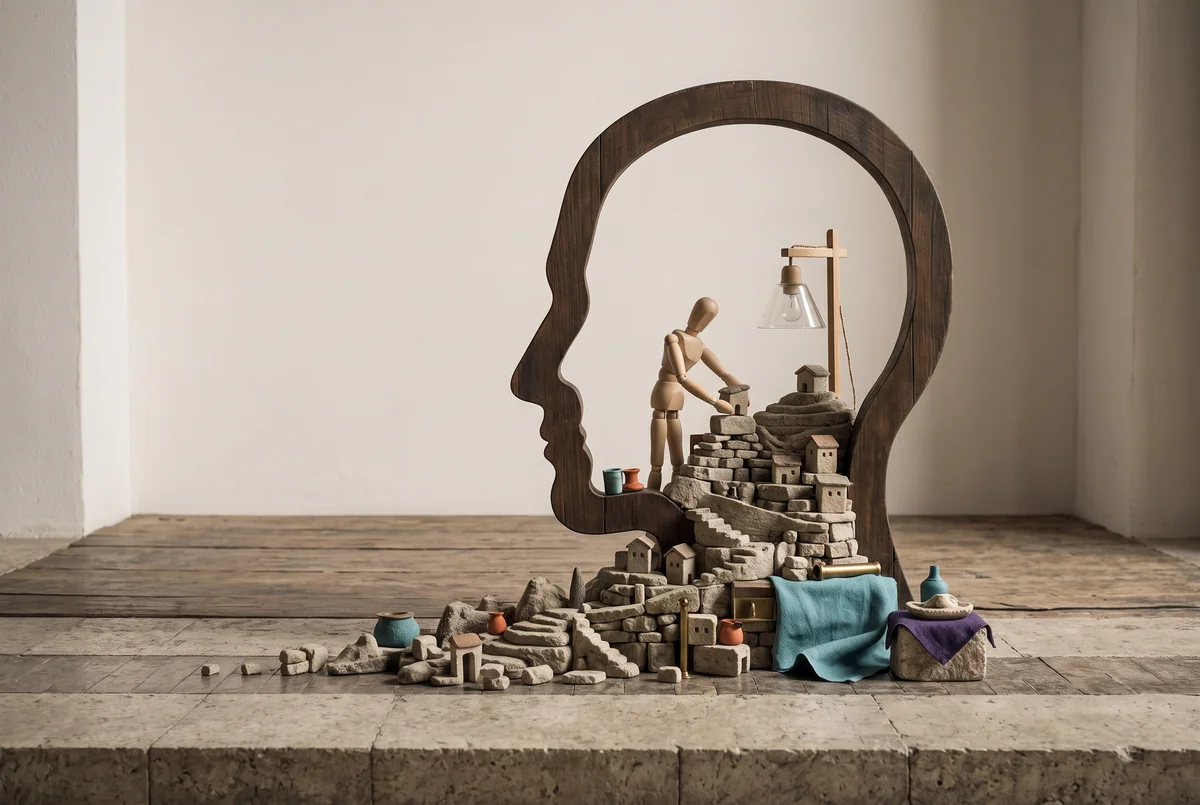
Tool · Perception filters
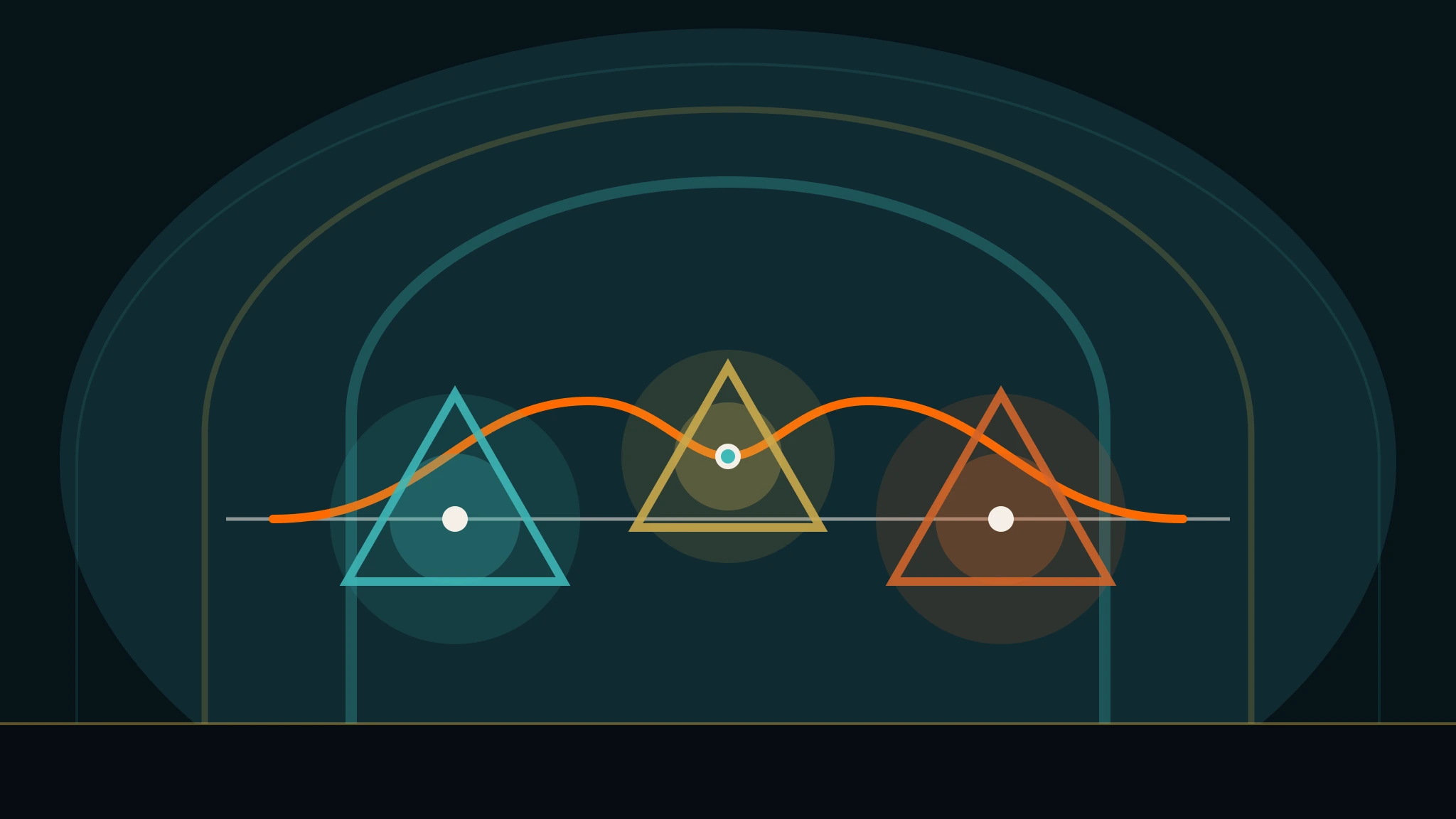
Three devices between stimulus and world
Between the world and you sit three devices. None of them asks whether you agree. They assemble the reality you then know for sure is simply how things are.
The comfort in it: filters you know can also be adjusted now and then. Meditation is basically nothing but tuning your own apparatus while it runs.
Choose a filter: click, or arrow keys.
Predictive coding · attention networks · narrative self · educational
Perception filters · three inner devices
Predictive Coding
Your brain guesses the world before it arrives, and corrects only on mismatch. Most perception is prediction, not reception. Friston (2010) formalised it as the Free-Energy Principle.
→ Karl Friston · UCL · 2010–2025
Attention filter
Classical estimate (Zimmermann 1989, popularised by Nørretranders): your sensory system takes in roughly 11 million bits/s, of which only about 50 bits/s become conscious. The numbers are order-of-magnitude comparisons, not measurements, but the asymmetry is real. Selection is made by a network of salience region (right insula), DLPFC and attentional networks. You see what you seek.
→ Cohen, Posner · Attention Network Test · 2002–2024
Narrative layer
On top of perception and attention sits a third: your story about yourself. “That’s who I am.” And that filters again. Bruner (1991): narrative self. McAdams (2013): life-script as identity.
→ Bruner, McAdams · narrative psychology · 1991–2023
- 1 · Karl Friston · Free-Energy-Principle
- 2 · If nothing on this page surprised you: your prediction apparatus is working flawlessly.